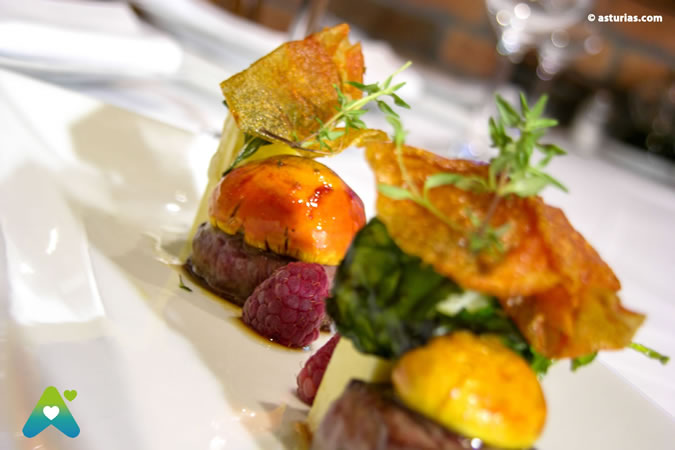
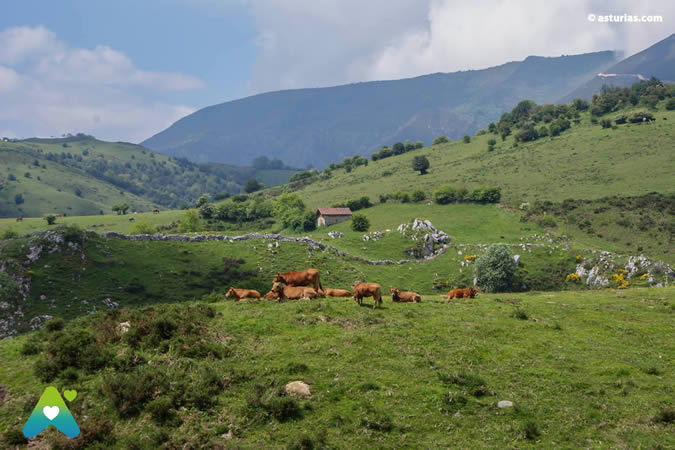
The Asturian pastures are the raw material for its beef. The green landscape of this region is populated by cattle that are born, raised, and fattened in a privileged setting.
Asturian beef is now a national benchmark. Its production is currently regulated under a Protected Geographical Indication (PGI) . “Asturian Veal,” or “Red Beef,” as it is also popularly known, is a designation that encompasses two cattle breeds: Asturiana de los Valles and Asturiana de la Montaña . The former is docile, thrives in rugged terrain, and withstands extreme temperatures perfectly. It has a chestnut coat, as does the Asturiana de la Montaña or Casina, which has been raised primarily in the eastern part of the Principality since time immemorial, playing a vital role in environmental conservation.
They are slaughtered, cut and stored in registered facilities, following the stipulated norms, and in their commercialization they carry seals and specific labels of origin, weight, place and date of slaughter of the animal. The use of anabolic substances is totally prohibited.
Its quality is fully guaranteed through rigorous controls, and livestock competitions proliferate throughout Asturias, awarding prizes to the most outstanding animals, reflecting a growing trend of improvement in the cattle industry. Cangas del Narcea is the leading meat-producing municipality in Asturias , followed by Tineo, Allande, and Piloña.

Roxa meat in the kitchen
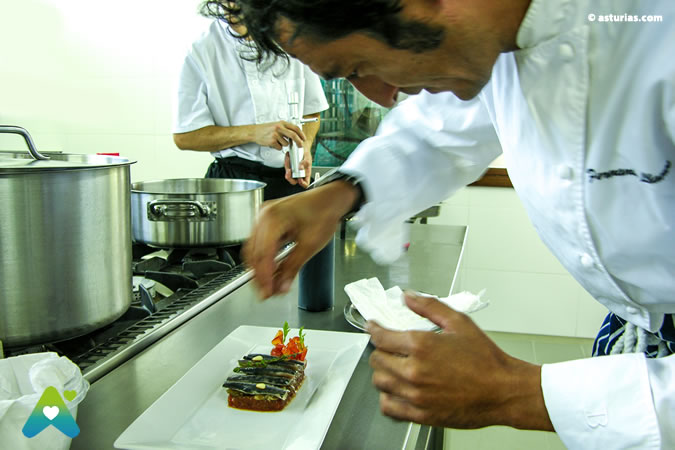
Roasted, grilled, stewed, prepared in countless ways, it's now an essential dish in regional cuisine . It has become so firmly established that in many Asturian homes and restaurants, no other product is served without this guarantee of quality. Depending on the dish being prepared, one cut or another must be chosen, and the Asturian restaurant industry knows this well, presenting us with the best dishes and the finest cuts, thus creating a basic list of dishes featuring this key ingredient.
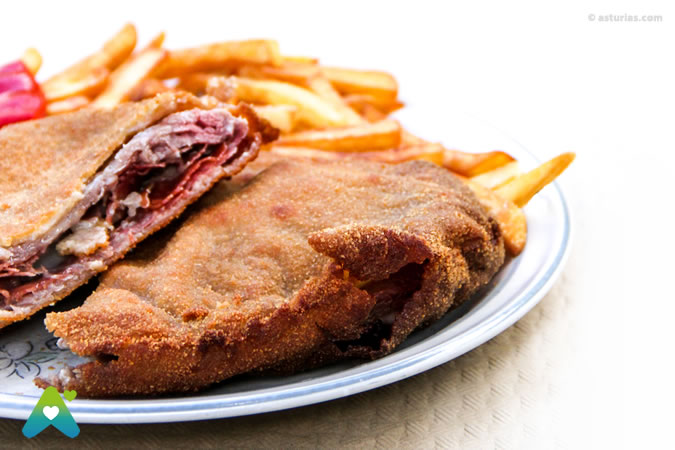
For Asturian restaurants, "our beef is the best" is their motto, and to further cement their reputation, they offer a host of dream dishes: from cachopo to a simple steak, including carne gobernada, sirloin with foie gras, veal escalopes with Cabrales cheese, T-bone steaks, and much more. If one had to select the most popular and flavorful recipes, one would have to mention sirloin with Cabrales cheese sauce and apple compote , and the ubiquitous and generously portioned cachopo.
The cachopo is similar in concept to the French "cordon bleu ," two veal cutlets stuffed with cooked ham and cheese. The Asturian version includes Serrano ham and a local cheese, along with various side dishes such as mushrooms, peas, and French fries. However, the most traditional Asturian version also incorporates boiled or fried turnips. The cachopo is often the subject of challenges among diners: to see who can eat the whole thing…
Cachopo of Asturias
Cachopo is an Asturian dish, a staple of its cuisine that is abundant throughout the region… Read more
The popular ribeye steak is also large and voluminous . A lavish delicacy that is doubly so if it comes from Asturias and is accompanied by shoestring fries.
If you remove the bone from a ribeye steak, it becomes an entrecote . Entrecote with Cabrales cheese is common in Asturias, but it's also served with other Asturian cheeses, with pepper, and with elaborate side dishes.
Sirloin steaks and escalopes are also excellent dishes made with Asturian beef. Asturian beef can be enjoyed grilled in all cases , even as carpaccio, by freezing the meat and slicing it.
Information:
Meat categories of Asturian Beef:
Culón veal: From animals slaughtered with a maximum age of twelve months and breastfed exclusively with breast milk. Very tender meat that is distinguished by its pink color.
Culon Yearling: From calves slaughtered with a maximum of eighteen months. These are animals with exceptional muscle development and just fat, which gives it its special juiciness and its peculiar deep red color.
Yearling: It is also slaughtered before the age of eighteen months and is of the non-French type, but maintains the best of its juiciness and flavor.
REGULATORY COUNCIL OF THE IGT TERNERA ASTURIANA
Sale of the Nail s / n - 33510 Pola de Siero
Tel .: 985 72 57 77 - Fax: 985 72 57 67
Text: © Ramón Molleda for asturias.com