Leonor and Carlos arrived at the town of Llanes after leaving Hiddelburgo 19 days before, deviating from its initial destination: Santander.
The royal procession was received with honors by the people of Llanes, they adorned their houses with bouquets and carpeted the pavement with flowers. The chronicler Mr. Vital collects it this way: "if they could have done it better, they would have done it with more pleasure."
They settled in Juan Pariente's house on Calle Real (Mayor) and there Carlos received the gentlemen of the town for the kissing. While, Leonor toured that fishing village, well protected between walls and whose pillars were: the Town Hall and Regiment and the Church, also the Brotherhood of Mareantes of Mr. San Nicolás, to whom his maternal grandparents, the Catholic Monarchs, had approved ordinances.
The route proposes a journey through time and seafaring history through the town to visit seven places of great interest: the Plaza de Santa Ana, El Fuerte, the Basilica, Mirador de San Pedro, The bridge, San Antón and the port.
1 Plaza de Santa Ana
2 El Fuerte
3 The Basilica
4 Mirador de San Pedro
5 the bridge
6 San Anton
7 Port
Plaza Santa Ana
Princess Eleanor crossed Calle Real and approached the Palace of San Nicolás or of the Marqués de Gastañaga, a stately Gothic-style construction located in the Plaza de Santa Ana, later running into the wall (it is the second long stretch in northern Spain), finally it contemplated the chapel of San Nicolás, patron saint of the peoples of the sea.
· The strong
Before nightfall that Saturday in September, walked to the Fort, still unarmed, as she would equip it, with five pieces of artillery, bastions and baskets, her nephew, King Felipe II, son of her brother whom she accompanied.
· The Basilica
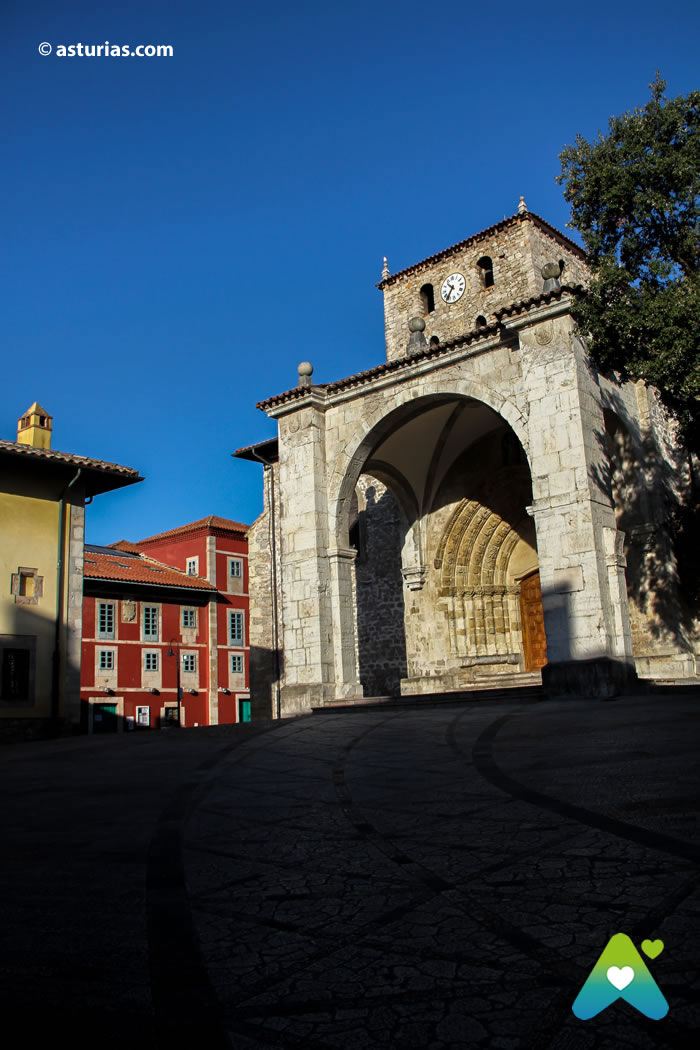
Sunday, King Carlos I and his sister went to hear mass at the churchAt that time it was surrounded by holm oaks and there were only granaries around it and no houses at that time. The Emperor would contribute a large amount to pay for the works that were being carried out in the ecclesiastical precinct.
It is one of the few examples of Gothic in Asturias. Its construction began in 1240, continuing until the XIV-XV century. It has two Romanesque façades, strongly flared, a bell tower and a XNUMXth century portico that protects the façade on the south side.
San Pedro viewpoint
After mass, Princess Eleanor went through a path to a stony mound, on which the sailors had erected a hermitage in honor of Saint Peter. There was impressed by the views of the sea and the villa, with its large houses, its towers, its mountains and its river.

The Paseo / Mirador de San Pedro in Llanes
Paseo de San Pedro is one of the nerve centers of the town of Llanes. At least it is for him…
The Bridge
In the afternoon, while her brother Carlos was enjoying a bullfight, Leonor approached the bridge, which had been built a short time ago and which made it possible not to take a boat to cross from one shore to the other. Nearby is "La Casa de las Sirenas", with two carvings on a window; and there he would listen to the mayor of the Brotherhood the legend of the fisherman who swam like a pike since he was the son of a mermaid and a man.
San Antón
Eleanor asked to visit a small chapel that she saw on the other shore. Was the hermitage dedicated to San Antón, where the image of the Virgen de Guía was deposited when it was rescued from the sea. They told him that after several appearances on a hill above the town, in 1516 a wooden chapel was built on that promontory.
· Port
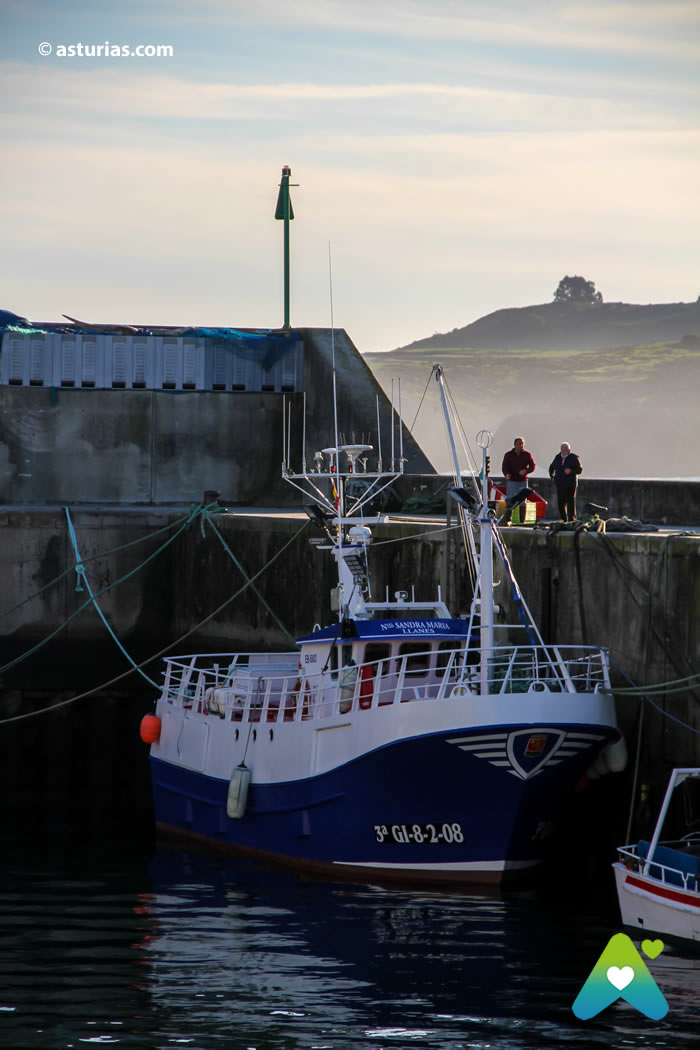
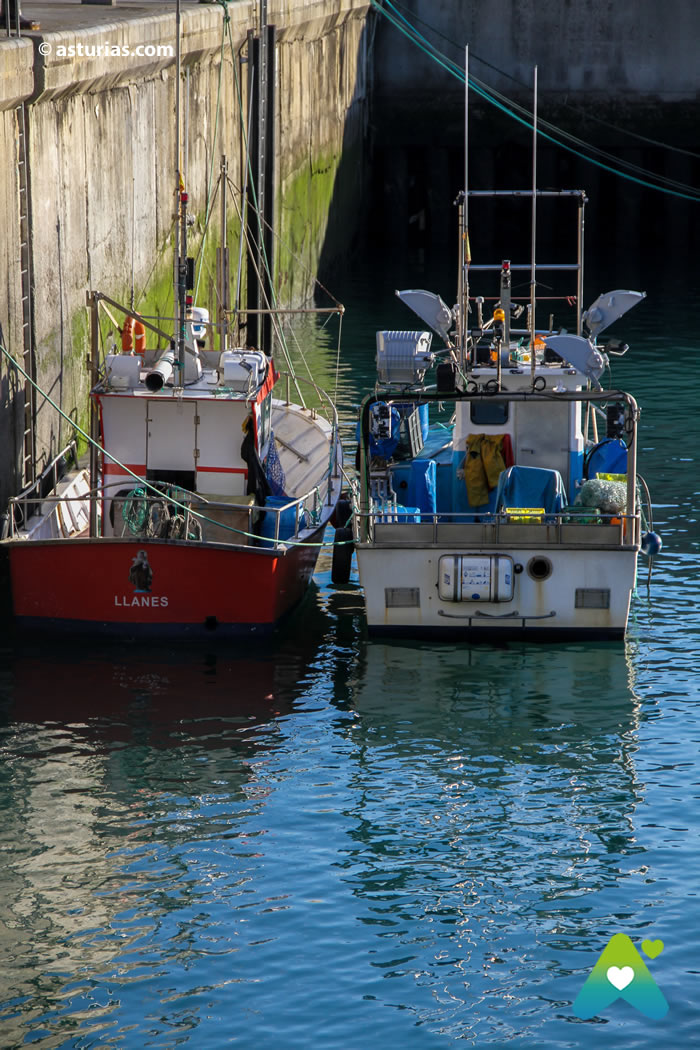
As the end point of this route through the town, and with just enough time to reach Vespers, Leonor visited the port area, the dock that, starting from "El Campu del gatu", separated the river from the Sablin beach, and perhaps also the Santiago dock. There he was amazed at the bravery of the local sailors capable of hunting large cetaceans.
Text: © Ramón Molleda for asturias.com