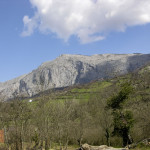


Declared a Natural Park in 2002 and a Biosphere Reserve in 2003 , with an area exceeding 5 square kilometers, it extends widely through the municipalities of Cangas del Narcea, Degaña and Ibias, being neighbor to another of the most beautiful Natural Parks on the peninsula: the Somiedo Natural Park.
Perhaps its biggest draw is Muniellos . Located in the very heart of this protected area, it's the largest oak forest in all of Spain and one of the best preserved in Europe. Visiting Muniellos is like stepping back in time to rediscover what the forests of the Cantabrian Mountains were like centuries ago. Once inside its boundaries, you must let yourself be carried away by a world untouched by human presence.
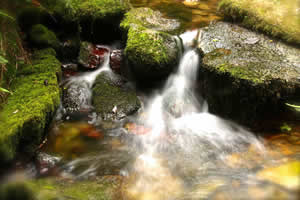
Forest of Muniellos
Muniellos harbors within its boundaries the ancient Asturian forest , its most deeply rooted character. Visit Muniellos… Read more
But this natural park also preserves other irreplaceable forests, most notably the one that stretches along the upper Narcea River basin (very close to its source). We are referring to the Monasterio de Hermo Beech Forest. Covering more than 1.500 hectares (approximately half the size of Muniellos), it is the largest beech forest in Asturias and one of the largest in the entire Iberian Peninsula. The village of Monasterio de Hermo , which gives the forest its name, is a secluded spot steeped in legend. One of the most enchanting landscapes in southwestern Asturias.
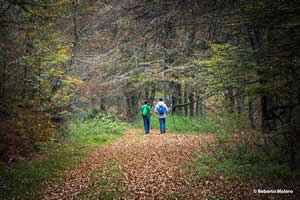
Hermo Monastery Beech Forest
The beech forest of Monasterio de Hermo is an immense wooded area, both highly photogenic and mysterious. Read more …
More forests. A spectacular forest, the gateway to Muniellos, takes its name from a small village: Moal (Mual), located about 20 km south of Cangas de Narcea but far removed from everything. With barely 80 inhabitants, this village was awarded the title of " Exemplary Village of Asturias" in 2018.
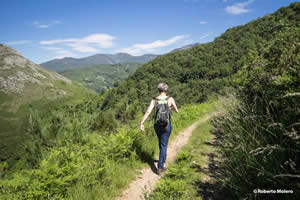
moal forest
Moal is a town in Asturias and also a forest; a green, humid expanse, full of trees… Read more
With such extensive woodlands, it is no wonder that the park is considered the great sanctuary of endangered fauna in the Cantabrian region, as it houses the best populations of brown bear and capercaillie known in Spain.
At over 2000 meters high is the Cueto de Arbás , an entire Asturian glacier declared a Partial Natural Reserve due to its great rarity in these latitudes, with sets of lagoons, ponds and small peaty areas.
Last but not least are the human populations that inhabit this park and have left evidence of their activity dating back at least to the Iron Age. Remains exist from this period, as well as from the Iron Age and Roman eras. Since then, the inhabitants of the municipalities of Degaña and Ibias have adapted to a mountainous area that has created a landscape of great plant diversity, upon which dolmens such as Pradías and Chao Leda stand. In Ibias, the traditional architecture of granaries and thatched houses is particularly noteworthy; an evolution of the ancient Iron Age houses. Traditions linked to forestry and agricultural activities have given rise to a whole series of ethnographic expressions, such as the popular curtain walls and fences, livestock pastures, and the traditional pottery and its associated jargon.
The region also boasts the only wine-growing area on the Cantabrian coast. It is a land of fine wine , which in recent years has experienced significant growth and recognition after achieving a prestigious designation of origin: Cangas wine.
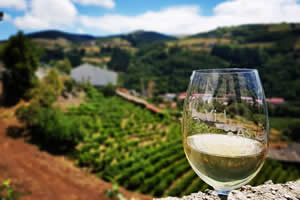
The wine of the Land of Cangas
The Vino de la Tierra de Cangas is the exception that proves the rule. The Principality is not a region… Read more
The most populated town in the park, the capital Cangas de Narcea , will welcome us with a rich heritage and cultural offering. It also boasts good accommodations and even better food.
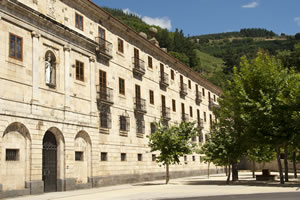
Cangas del Narcea
The wildest Asturias is found in the vast municipality of Cangas del Narcea. A territory often… Read more