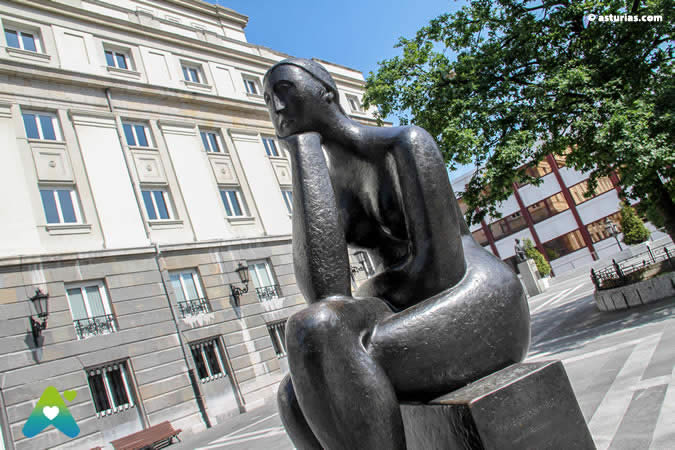
Construction of this area of Oviedo began in 1660 with a series of arcaded houses, later known as the Arco de los Zapatos (Arch of the Shoes ). On one side of the Plaza del Fontán is the Plaza de Daoiz y Velarde , and on one side of this plaza stands what was once the famous Casa de Comedias (House of Comedies ) or Teatro del Fontán (Fontán Theatre), which, preserving its original façade, is now occupied by the Pérez de Ayala Public Library. Next to it rises the Palacio del Duque del Parque (Palace of the Duke of Parque) , owned since 1892 by the Marquises of San Feliz: the most authentic Baroque palace in Oviedo.
Origins of Fontán
Originally, this entire area was nothing more than a natural lagoon located on the outskirts of the city . The lagoon was fed by natural springs. Its name comes from the main spring, or fountain, that supplied the lagoon with its waters. The nobles of Oviedo quickly transformed this nearby oasis into a recreational area . At the same time, the farmers who lived in the vicinity of the city considered it an ideal location to sell their produce: milk, vegetables, cheeses, chickens, and so on. The growing commercial activity in the area soon attracted artisans offering their wares. And so, little by little, a thriving market developed that continues to this day.
In the 18th century, the lagoon was drained, and a porticoed plaza was built in its place to accommodate the many merchants. Not without controversy, the plaza was recently restored as it was at serious risk of collapse. In 1996, the municipal authorities decided on its demolition and reconstruction. In 1999, the new plaza, which maintains the simplicity and proportions of the original, was inaugurated.
The Fontán district has been beautifully recreated in literature: in "La Regenta" it's the Plaza del Pan (Bread Square) , and Ramón Pérez de Ayala immortalized it in his famous novel "Tigre Juan." This literary flavor seems to be savored daily, as strolling through its streets can make you feel like a character in a novel. The entire area is a hive of activity, bustling with people and shops offering the best in fashion, both old and new crafts, the finest cuisine, and a bustling flower and plant market. You'll also find a modern and beautifully designed food market, surrounded by shops and restaurants.

What days to visit Fontán?
Its commercial origins therefore remain the essence of its activity. In the center of Daoiz y Velarde Square, we find the most fitting sculpture, dedicated to the traditional market vendors. It is in this square and in Fontán Square that street vending takes place on Thursdays, Saturdays, and Sundays in the morning . A bustling market in Oviedo where you can find just about anything and which, at first glance, sparks the interest of everyone: regular shoppers, occasional customers, or simply curious onlookers.
We are talking about one of the most authentic flea markets in the country , and it is not only because of the diverse density of the offer, but because the canons of any self-respecting popular market are strictly respected: welcoming environment, urban atmosphere, historical essence on all sides, absolute typicality in the sales stalls and dozens of picturesque places to have a snack between purchases.

Text: © Ramón Molleda for asturias.com