

Rural tourism accommodations in the area will offer practical advice on how to reach the ideal locations to witness the rutting season; in some cases, in addition to providing information, they will guide us to these same places on organized excursions.
When is the bellowing in Asturias? When does it start?
What is popularly known as the rutting season is nothing more than a demonstration of strength and mating, a period that begins in mid-September and ends in November and marks the time when the libido of the deer suddenly awakens.
A rutting season breaks the traditional silence of the forest with incessant bellowing. As autumn progresses, the animal clamor grows ever louder, reaching its peak when all the males compete for the favor of the females and prove who among them deserves to create a new generation of deer. A true example of animal Darwinism.
For weeks, the males barely bother to eat, focusing almost entirely on sexual activity, to the point that after the rut they may have lost a fifth of their weight. The clashes of antlers produce a uniquely wild, explosion-like sound that echoes through the mountains. The challenges follow one another relentlessly; the tension is palpable in every bellow; the calls to the females become deafening.
After the fight, wolves, vultures and other scavengers will take advantage of the weakest: those who always come out worse and who have not been able to demonstrate their gallantry in the fight.
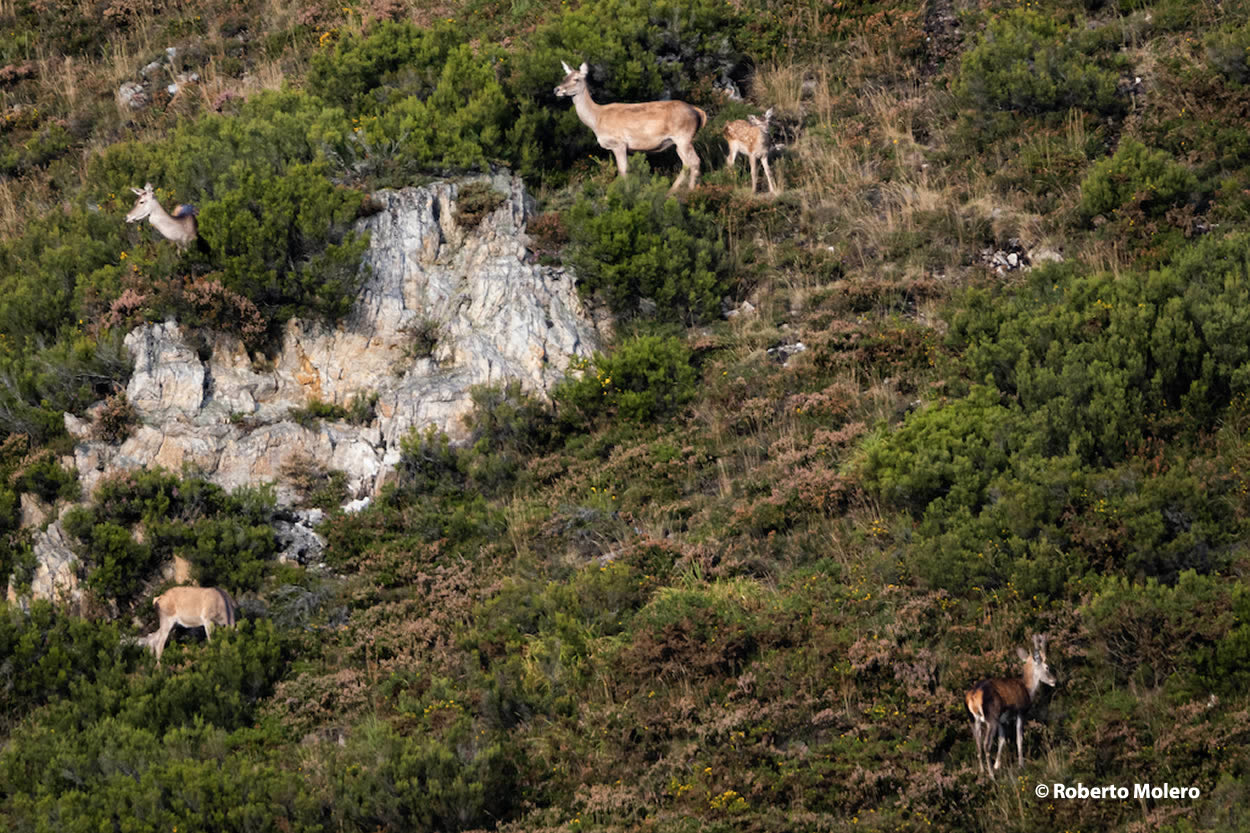
This spectacle of nature can be contemplated in its habitat, comfortably and without interfering with its natural development.
Routes to the rutting season in Asturias 2026
We offer you the possibility here… Read more
When is the best time to see the bellowing in Asturias?
There are two times: at sunset , from when the sun begins to hide until two hours later , or at sunrise and the two hours before.
Information:
Places to witness the bellowing in Asturias:
Council of Aller, in the central mountain of the Principality, which for some years has been organizing tour packages for this show in which the rural lodgings and the town hall itself collaborate. They consist of a weekend, from Friday to Sunday, with full board and accommodation in addition to the aforementioned excursion to see the bellowing. The excursions are made in off-road, either from Collanzo, to the Cuetos Cuetos, or to La Valencia from Felechosa. The 5: 30 is the time to get up to face a long and intense day full of emotions. At one point, the vehicle will abandon us and we will continue the march on foot for about thirty minutes.
The Natural Park of Networks. One of the ideal places to enjoy the bellowing in the natural park is the Cabeza del Arcu, in the mountains of Caleao. There, with a background of deciduous forests, ideal environment for the refuge of the deer, you can witness the wild sonata. Sometimes, if the visitor is accompanied by forest guards, it is possible to observe the deer in full contest.
Somiedo Natural Park: A short walk leads to an area offering excellent opportunities to observe and listen to the deer rut. The Pineda pass is probably one of the best spots in Asturias to witness this spectacle, as a large rock serves as a viewpoint overlooking the entire Orticeda valley. It can also be seen in Perlunes, about 6 kilometers from Pola de Somiedo. The routes are available from dawn until 2 pm for small groups and include an interpretive walk about the wildlife of the Somiedo Natural Park. For more information: +34 609 547 788 and +34 661 524 378 (NATUR).
The council of Ponga, recently declared a Natural Park, constitutes an optimal place to observe this phenomenon. The entire territory is composed of large forest stands of autochthonous forest that alternate with meadows and high-altitude natural pastures. This habitat is the ideal deer, which takes refuge among the shadows of the trees all over the council of Ponga to the forests of Sajambre, including Bosque de Peloño, Salguerosa, El Semeldón and Monte Pedrosu, among others . The displacement to the indicated places to observe the rutting can be carried out autonomously in own car accompanied by experts from the area. In Ponga visitors are offered special menus, related to venison, hunting and other products of the area.
Council of PiloñaFrom the La Pesanca recreational area; to see the rutting season itself you have to go on foot, it is not a long walk and it takes place in a mountainous area.
In Teverga It can be seen in different places, the most popular being the Alesga area. In the Sierra de La Mesa, and especially in the Tevergana slope, there are several enclaves: Braña de las Navariegas, Valle de Cuevas, Braña de la Aguil, Fuenfría, La Vallina el Mosquito, La Sedernia and El Cuervo peak already in the near the Port of San Lorenzo.
Proaza Council, in the area of Caranga, the area of berrea closest to Oviedo. To locate the good points, it is only necessary to ask some of the locals in Caranga de Arriba. In La Peña la Forcada there are good sightings and also in the Mengollo valley.
Helpful tips: the footwear must protect the ankles well. It is advisable to provide warm and rain clothes, preferably a raincoat or cape.
Text: © Ramón Molleda for asturias.com