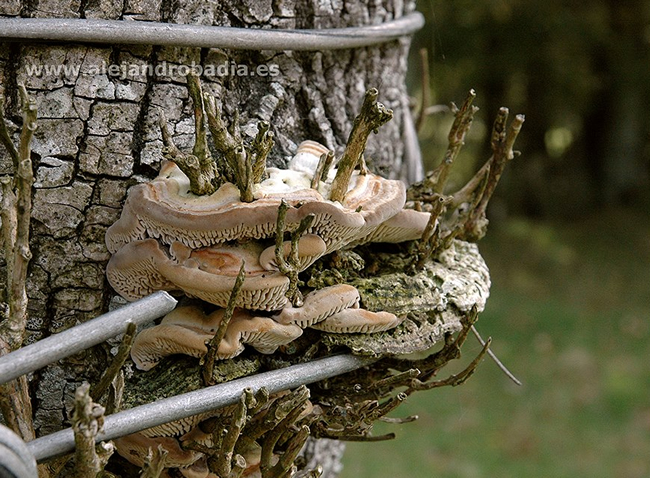
The fans of mycology are clear: Asturias is the mushroom paradise. At the foot of its oak and chestnut trees grow, among others, boletus, catharellus and russulas; under the hydnum beech trees and more russulas; in the birches more tickets; around the pine forests: lactarius and more russulas and boletus. The chanterelles abound, the chanterelles, the trumpets of the dead are also common... Of the three queen mushrooms of the Iberian Peninsula, Two are regularly found in Asturian land: the «Boletus edulis» and the «Amanita caesárea». The only one that there is no record of is the truffle.
Unlike other communities, in Asturias you can collect edible mushrooms practically in all seasons of the year. The season can begin in the spring, in the month of April, with the appearance of morchelas. Soon spring mushrooms sprout or San Jorge, the most coveted and sought after in the entire North. They begin to emerge during the first days of March in the meadows near the coast and, as spring advances, they can also be collected in the central zone and in the meadows of the ports of Somiedo and Puerto Ventana. In summer find cantharellus, various tickets and russulas. En el autumn almost all species begin to bear fruit: tickets, lepistas, lactarios, tricholomas, etc. At winter, although few, springs some mushroom as the Flammulina Velutipes.
The extensive geography of the Principality, together with its varied habitats: mountains, forests, meadows, riversides ..., makes mushrooms appear everywhere, although they exist areas more conducive to the collection and with a greater mycological tradition, we mainly talk about the Central and Western Mountain, and in particular of municipalities such as Mieres or Cangas de Narcea. The natural parks of Redes and Somiedo or the forest of Muniellos are privileged enclaves. They also stand out in the Asturian west the high councils of the interior: Boal, Illano, Los Oscos ... In the central-eastern area the municipality of Piloña It is the most prominent, as well as all the peripheral councils of the Sierra del Sueve.
Mycological tourism
If our idea is to do mycological tourism, we must be clear that there are good areas at any point of the Asturian geography, although you always have to look for forests where there is no eucalyptus, such as areas of pine forests, high places or mixed forests. Other explanations are of a truism for true fans: go to the forest with wicker baskets or similar, never with plastics; take us a knife and a brush to clean the mushrooms in the field, since the spores stay in their environment and the mushrooms are clean at home; At all times we must be respectful of nature, picking only those we are going to eat. Last but not least: be prudent, have a prior knowledge and never eat mushrooms if we are not one hundred percent sure that it is edible.
If we are interested in a guided view we may have to contact "Shiitake Forest" in the vicinity of the city of Oviedo.

Shiitake Forest
Our forest covers more than 5.000 m2 located in the rural area of Oviedo, with humidity conditions...
Despite the great wealth that he treasures in this respect, the love in Asturias for the mushrooms is very late. This is due to reasons linked to religion and ancient mythology that have survived for centuries. Astures always felt dislike of mushrooms. This ancestral superstition was gradually correcting and from the 80 years of the twentieth century proliferate mycological societies and specialists throughout the region. further the mushroom is fully integrated into the gastronomy: alone, accompanying the main regional dishes or in new and suggestive recipes that try to enhance their primary flavors. The value of the mushrooms is clearly seen in the large number of contests They choose it as a protagonist based on photographic exhibitions, tasting special menus in restaurants, competitions, guided tours and field trips.
Mycological associations of Asturias
Asturian Society of Mycology
They organize workshops and excursions to collect mushrooms. Registration on the phone 645 12 80 20
C / Tirso de Molina, 8. 33204 Gijón.
contacto@asturianademicologia.com
· Pañeda Nueva Mycological Society
Paneda, Siero. Tel: 985 92 06 83
La Pardina Mycological Association
C / La Vega, 32. 33600 Mieres. Phone 985 45 20 56
info@lapardina.com
Photo report of: Alex Badía
Text: © Ramón Molleda for asturias.com