Granaries were once a part of the Asturian landscape, a consequence of the inevitable human adaptation to a harsh and humid environment . If you travel through Asturias, you'll see that granaries exist. They are more or less common. However, in most cases, they are mere exceptions, scattered and not very dense. In some rural areas, they are not even found. Moreover, being exceptional, they usually survive in ruins and are unusable, and in many cases, they serve little purpose other than to shelter tools, vehicles, or carts within their structure.
What is an Asturian granary? What is it for?
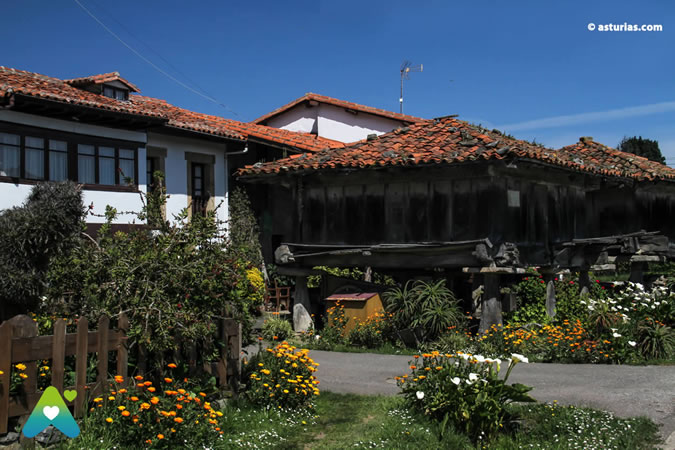
By seeing granary after granary, we understand that the villages were territories full of life and ingenuity, and we confirm with our eyes that in this village there is the largest concentration of granaries in the entire eastern area of Asturias.
Today, granaries serve other purposes, or perhaps none at all. Only their exterior reveals that they still fulfill their original function, and it's not uncommon to see them adorned with onions, garlic, and other less perishable garden produce. In this sense, modern refrigerators and freezers have relegated the granary to an almost romantic role.
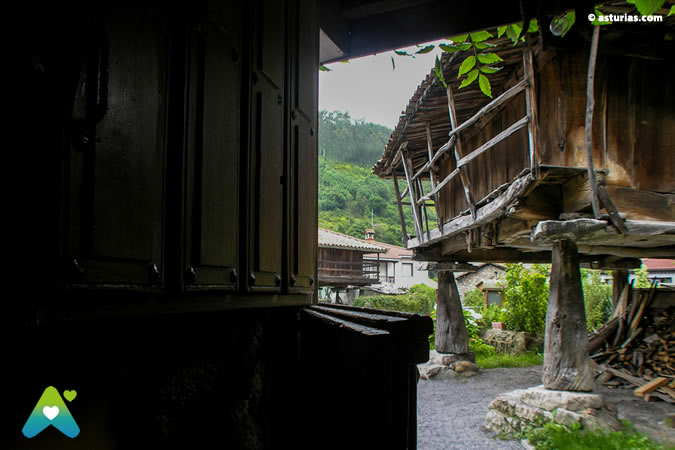
In Espinaréu , as if time has stood still, these structures seem to tell us they are still alive. And with good reason, they have every right to stand tall, for this village boasts the oldest granaries of this type in Asturias . If we wish, we can see one inside, bearing in mind that all the granaries are privately owned and locked, so permission is required to enter.

The granaries of Espinaréu, like those in the rest of Asturias, also hold a mystical, or perhaps superstitious, essence. The village's ethnographic heritage is enriched by the mystical and magical symbols inscribed on their walls. These persuasive elements, often intended to ward off evil spirits, are of primarily Celtic origin and were originally drawn or carved in forests and caves. These symbols coexist with purely ornamental and commemorative ones, such as the marks of the builder, and with a number of generational messages and mottos open to interpretation and analysis by the more inquisitive observers.
Hórreos… and bread baskets in Espinaredo
In Espinaréu, both hórreos (raised granaries) and paneras (bread granaries) coexist . The latter are very similar to the former but larger, with six pillars instead of four, a corridor, a balustrade, and more ornamentation. Both types of structures were primarily made of chestnut wood, and their pieces were joined without a single nail , using wedges of the wood itself for assembly.

It is known that granaries and bread stores were vital in a farmhouse and that often, at least the bread stores, formed part of the bride's trousseau . Going back further in time, we discover that their origin is uncertain. Some maintain that the large wooden crates transported on wheels to Roman camps during the imperial conquest campaigns, forerunners of modern caravans, were frequently abandoned and repurposed by the locals, who placed them on supports to use them as storage.
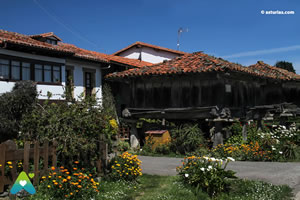
Asturian granaries
Etymologically, the word hórreo comes from the Latin horreum, which designated a building in which… Read more
The Espinaréu environment
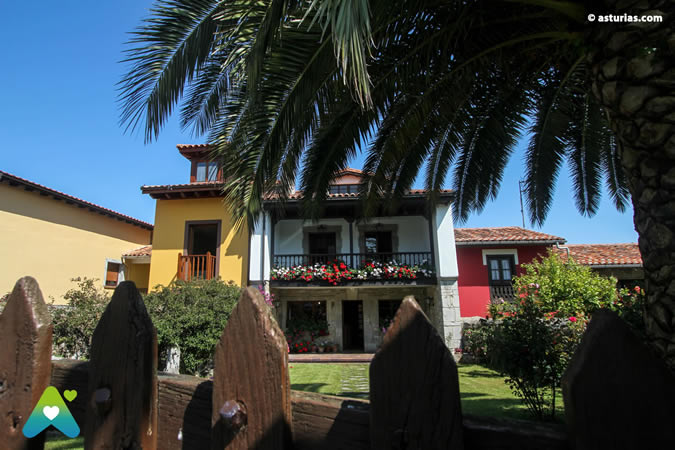
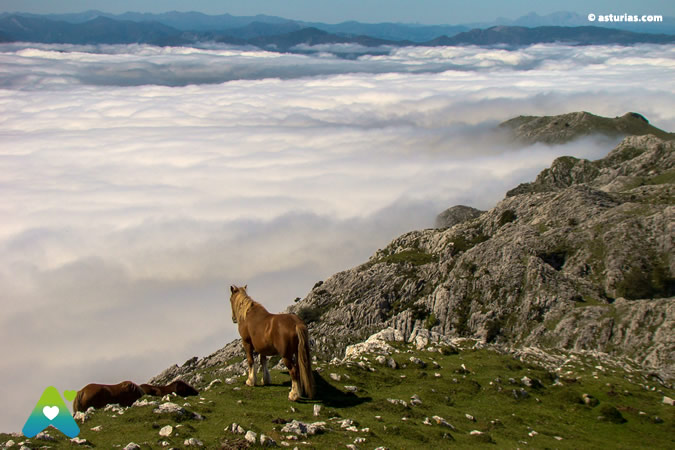
Espinaréu is a great starting point for experiencing the essence of the Asturian countryside, but it's also a magnificent setting for further admiring its landscape. The proximity of the mountains and native forests makes hiking an exceptional experience. It's also ideal for horseback riding and mountain biking. The Espinaréu and Sotu rivers flow through the area, and signs indicating the routes are located nearby. Just three kilometers from the village, along the winding road to Riofabar, you'll discover two excellent spots for relaxation: the La Pesanca recreation area and the Miera Arboretum , situated on the banks of the Infierno River, nestled between the Sierra de Aves and La Giblaniella mountain ranges. This area is blessed with abundant natural resources, boasting one of the largest stands of beech, oak, and chestnut trees in all of Asturias.
Text: © Ramón Molleda for asturias.com