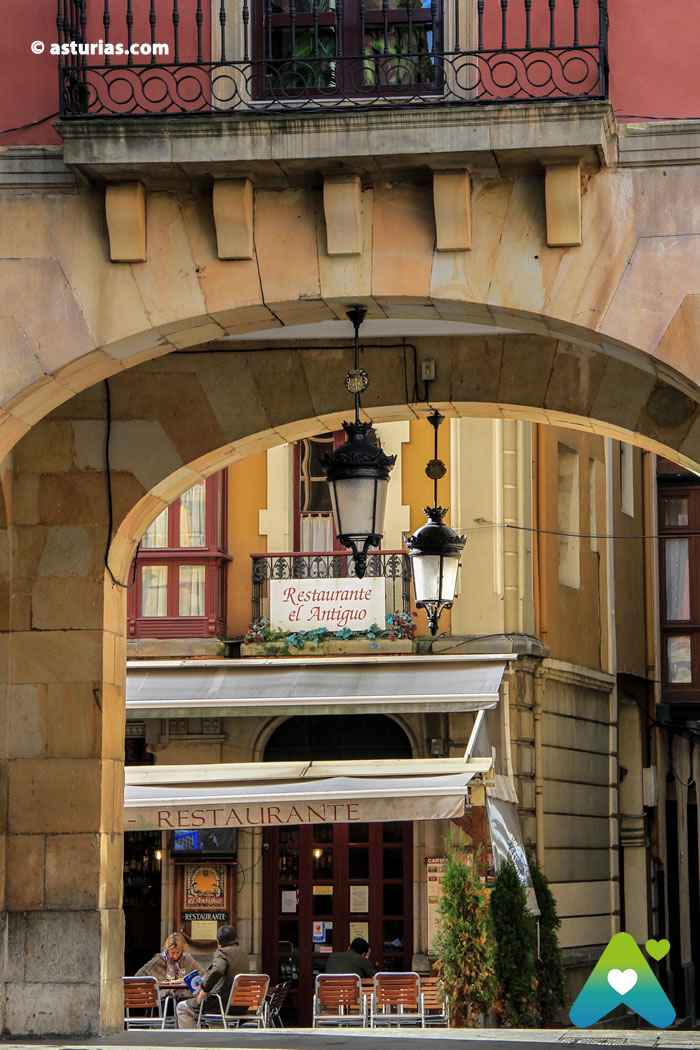
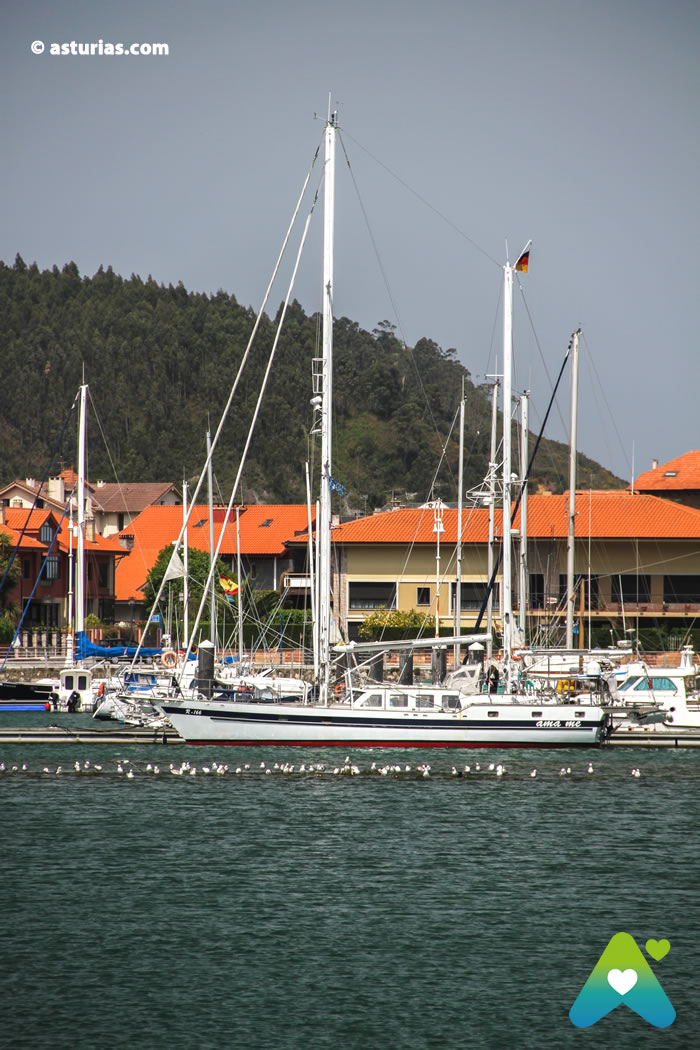
We propose them a unique route in its kind that, traveling the Asturian coast from West to East, will stimulate our five senses with pleasant experiences. The fishing villages and towns of Asturias are a healing balm against stress, a kind of primitive substances that put us in tune at all times with fresh air, saltpeter and healthy gastronomy. One of the best alternatives to enjoy Asturias and its coast At any time of year. We bet that if you visit any of these locations you will not stop until you complete them all. Of course, little by little, without haste, very calmly...
Castropol
We are talking about a picturesque town like few others, located in the -still unknown by many- western end of the Asturian coast. A town that enjoys an extraordinary historical center and that is located on a beautiful hill in the shape of a peninsula on the large, and no less beautiful, Eo estuary.

Castropol
Anchorage, shelter, bay, estuary, gulf, inlet, port, inlet... all nouns that apply to...
Tapia de Casariego
The town of Tapia de Casariego is a charming fishing village on the western coast of Asturias. Your fishing port It deserves a must visit to enjoy one of the most beautiful views of Asturias and taste the products of the sea in its windmills and restaurants. The beaches and coves de Tapia provide one of the most memorable baths in the Principality without leaving its urban area. It also has privileged waves, being one of the surfing meccas in Spain.
Tapia de Casariego
The fishing village of Tapia de Casariego is a charming enclave on the western coast of Asturias. Its port…
Port of Viavelez
This secluded and charming port seems like a whim of the sea. A fishing village with a well-drawn estuary, and surrounded by slender cliffs. We look at it like someone looking at a model, with all the elements within easy reach. From this enclave, the locals could see the ships that once captured whales in the Cantabrian. From the dock we can approach the magnificent viewpoint that serves as the beginning of the coastal path between Viávelez and Porcía.
Viavélez
Approaching Viavélez is a real find for the traveler. This hidden and charming port seems like the…
Navia
With its 6.000 inhabitants, it is the most populated nucleus on the western Asturian coast. In it port naveto boats of all kinds coexist: fishing boats, large fishing merchandise ships, sailboats... The port area is well stocked with bars and cider bars. In the urban area, the medieval layout coexists with the 4th century expansion and new contemporary neighbourhoods. Parallel to the estuary (which is navigable for XNUMX kilometers, and where the famous Descent by Swim is held), runs a beautiful boardwalk.
What to see and do in Navia
Navia is one of the most populated and dynamic Asturian towns, one of those with the greatest commercial and industrial life...
Puerto de Vega
The urbanism of this traditional fishing village leaves a trail of nineteenth-century romanticism that is difficult to find. In the labyrinths that form its streets and alleys, the beauty of the mansions surprises. In 1998 he was elected most beautiful town of Asturias. The local economy is linked to the sea, both to fishing and to the industry derived from canning, salting and pickles. The charming fishing fleet rests in a picturesque port with a wall included, battlements in perfect condition that stopped piracy in the Middle Ages
Puerto de Vega, exemplary town
The inhabitants of Puerto de Vega move, they love their town. There are barely 2.000 residents but…
Luarca
The fame of Luarca crosses borders, being one of the towns with the most name in all of Asturias. Baptized for its charm as the White Villa from the Costa Verde, has always had a deep seafaring vocation. The traveler can witness on the spot the return of the fishing boats and the auction of the catches at the market around three in the afternoon. In the area of the fishing port, of extraordinary charm, we will find many reasons to sit at one of the tables of its restaurants and taverns.
Luarca, marine essence
The beauty of Luarca takes the shape of a large aquatic S, around which it has found accommodation...
Cudillero
A town that gives its name to an entire western council, where the houses are staggered, forming consecutive urban terraces over the sea and giving rise to a very beautiful and very recognizable image. We talk about one of the most beautiful villas in the entire Cantabrian which came to have the largest fleet in Asturias. stand out on way the atmosphere of the terraces of the Plaza de la Marina. Restaurants and bars bring out their tables and chairs inviting visitors to enjoy the pixueto atmosphere and a good skewered hake. To better assimilate the great photogenicity of the place, you must visit the route of its viewpoints: The walk to the lighthouse, La Garita, La Atalaya, El Pico ...
Cudillero, the mirror of the sea
Few fishing villages are reflected in the water like Cudillero. A villa that gives its name to an entire…
San Esteban de Pravia
In a not too distant time, this port was worked by piecework for 24 hours a day, it was one of the busiest on the peninsula. The old coal dumps and the great cranes, the mouth of the mightiest of the Asturian rivers: the Nalon, its seafaring people and excellent gastronomy bring together in the town of San Esteban a lot of reasons to visit it. In the Nalón estuary, the boats unite the two shores -San Esteban and San Juan de La Arena, in the neighboring municipality of Soto del Barco. This being one of the most privileged areas for the eel fishing in the winter.
San Esteban de Pravia
There was a time not too long ago when this port of San Esteban de Pravia was worked piece-rate for 24...
Luanco
Since the XNUMXth century it has been established as a summer resort. But this picturesque town, close to Cabo Peñas, is well worth a visit at any time of the year.
Its attractions are many: the friendly character of its people, its excellent cuisine, the seascapes or the authenticity of its urban area, in which the marine activity has generated a characteristic type of dwelling, with corridors that will later be transformed into galleries, usually painted with the same paint as the boats.
Seafaring village of Luanco
Feeling at ease here is very easy, so Luanco's magic is an open secret. Since the ... century ...
Candás
For much of its history, Candás was the port that marked the price of fish in Asturias thanks to its great canning development. Walking through Candás is a very rewarding experience. We can start from the port itself and its promenade, which together with the nearby urban beach of La Palmera is one of the busiest areas, where catering establishments and restaurants abound. The streets of Candás also exude an air of preserves and crafts, with shops specializing in exclusive pieces and Asturian products everywhere, especially one-of-a-kind tins of preserves.
Candás, tourism in a fishing village
This fishing village, located in one of the northernmost points of the peninsula - just 13 kilometers from...
Bowls
This town keeps the essence of the Asturian village, but in this case of a peculiar village, with granaries but open to the sea, with the air of a town. The recesses of its physiognomy resemble the capricious folds of a net that rests in the port and that has trapped its 300 inhabitants. Here and there we find alleys, small paths that intersect with others in a friendly labyrinth. The paintings on your balconies and windows they are intense, the smell of cider, shellfish and fish reaches us on the main road. There is an appetizing supply of winches and restaurants that feed on native fishing.
Bowls: the town and the sea
Tazones keeps the essence of the Asturian village, but in this case a peculiar village, with granaries, but…
Lastres
Since the spring of 2014, it has been part of the select club of the “Most Beautiful Towns in Spain”. A town that continues to house one of the most famous port pictures in Asturias: the fishing boats with the stepped bottom of a beautiful seaside town. Some 400 tons of fish are caught here annually, and therefore it is an ideal place to eat well and stock up on local preserves. Lastres and its adjacent coast also sit on the cliffs with the most history in the region. The Jurassic terrain is evident in the nearby La Griega beach, with impressive dinosaur footprints. Barely two kilometers from this town is the Jurassic Museum of Asturias.
Lastres: the fishing village
Lastres, in the council of Colunga, has joined the select club of the «Towns more ...
Ribadesella
Undoubtedly a pearl among the fishing villages of the Cantabrian Sea. The port and mouth of the Sella It is a magnificent enclave, as we can discover by making the hermitage of Guía popular. In the Santa Marina beach we enjoy another dream walk among numerous and striking Indiano mansions from the early XNUMXth century. In the urban area of Ribadesella we find a good restaurant at every step. Gastronomy local is one of the most famous in the Principality for tradition, good work and excellent raw materials. In this town we can also enjoy one of the most relevant cave samples in the world: The Cave of Tito Bustillo.
Ribadesella: what to see in one day
Ribadesella is a privileged enclave, its location on the edge of the sea and its unique shape make it…
Llanes
Capital of the council that bears his name, it is the urban benchmark for an extensive, rural and marine territory, which grows in an elongated shape parallel to the Cantabrian Sea and is dotted with beaches and the best examples of Indian architecture in all of Asturias. At the town, the sea that gets into every corner and gives us its flavor and aroma in the middle of centenary buildings, streets and alleys, squares, small squares, promenades and abundant terraces where you can take a break. Within the urban center of Llanes is Playa del Sablón, a charming cove above which runs a long walk along the cliff. The unforgettable Walk of San Pedro, a kilometer long, is a leveled and fertile path from which the reality of the town is discovered, a "llanera" between the sea and the mountains.
The town of Llanes
The town of Llanes, capital of the council that bears its name, is the urban reference of an extensive territory...
Text: © Ramón Molleda for asturias.com